
Table of Contents
ToggleIf you’ve spent any time in a workshop or on a job site, you’ve likely grabbed a Milwaukee power drill or impact driver. The company behind those reliable tools is also a significant employer, offering career paths across manufacturing, engineering, sales, and support functions. Whether you’re a trade professional looking to transition into tool development, or someone seeking stable work in the manufacturing sector, Milwaukee Tools jobs span a range of roles with competitive benefits and opportunities for advancement. This guide breaks down what positions are available, what hiring managers expect, and how to position yourself as a strong candidate in 2026.
Key Takeaways
- Milwaukee Tools jobs span manufacturing, engineering, sales, and support roles with competitive benefits, health insurance, 401(k) matching, and tuition reimbursement opportunities.
- Entry-level factory positions including assembly, machine operation, and quality control require minimal prior experience but value attention to detail, safety awareness, and willingness to work extended shifts.
- Skilled maintenance technician and technical support specialist roles—ideal for candidates with trade backgrounds—offer higher pay and greater stability as the company modernizes facilities with automation and IoT technology.
- Sales and customer service positions benefit from prior construction or trade experience, with commission-based structures and the opportunity to build relationships with contractors and distributors.
- Milwaukee Tools hiring patterns peak during spring and fall construction seasons, so timing your application through the company’s careers page increases chances of landing interviews.
- Advancing within Milwaukee Tools requires developing technical skills like reading blueprints, understanding electrical systems, and cross-training across production areas to transition from assembly into specialized roles.
Overview Of Milwaukee Tools As An Employer
Milwaukee Electric Tool Corporation (part of TTM, Techtronic Industries’ power tool division) operates manufacturing facilities and offices across North America, with major hubs in Wisconsin, the company’s historical home, plus regional centers in other states. The company employs thousands globally and maintains a reputation for innovation in cordless technology, brushless motors, and IoT-connected tools.
Working at Milwaukee Tools offers exposure to cutting-edge engineering and manufacturing. The company invests heavily in R&D, meaning employees often work on products that shape the future of the construction and DIY markets. Compensation is typically competitive with other major tool manufacturers, backed by health insurance, retirement plans, and educational reimbursement programs. The culture emphasizes problem-solving and collaboration, traits that mirror the hands-on mindset of the users who rely on their products.
One appeal is that Milwaukee Tools serves both professional contractors and homeowners, so roles span everything from factory floor work to customer-facing support. This diversity means career paths aren’t linear: an operator in manufacturing might move into quality control, then shift sideways into technical support. The company also has strong relationships with trade unions in some facilities, which can mean additional job security and structured advancement schedules.
Types Of Jobs Available At Milwaukee Tools
Milwaukee Tools hires across multiple departments, each with distinct responsibilities and skill requirements. Below is a breakdown of the primary job categories you’ll encounter when reviewing open positions.
Manufacturing And Production Roles
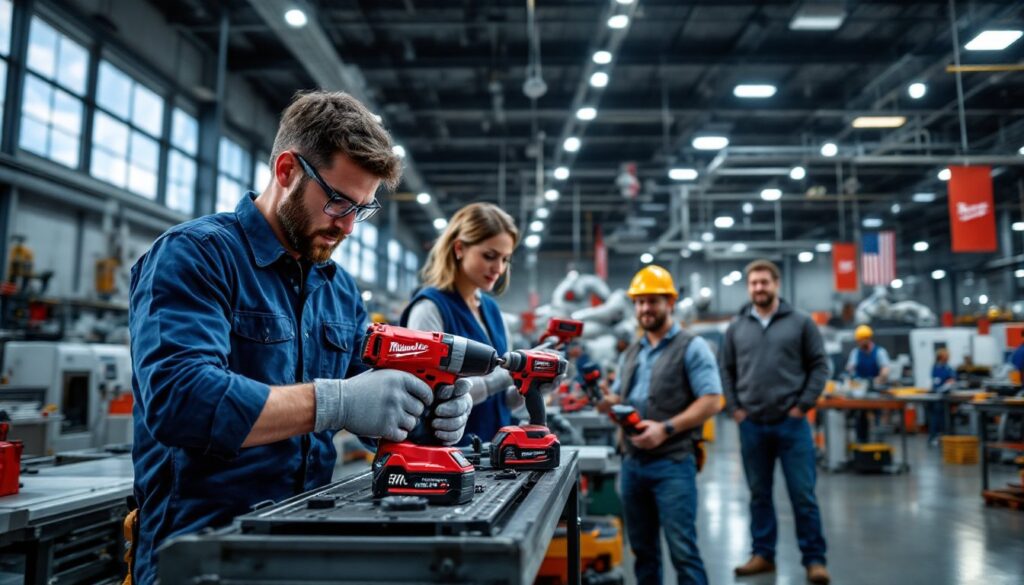
Factory positions form the backbone of Milwaukee Tools’ workforce. Assembly line roles involve building power tools from component parts, installing motors, wiring batteries, testing electronics, and packaging finished units. These positions don’t require prior experience: training is provided on-site. What matters is attention to detail, the ability to follow procedures, and a willingness to stand for extended shifts (usually 8–10 hours). Many facilities operate in multiple shifts to maximize production, so you might work mornings, afternoons, or nights depending on the schedule.
Machine operation roles require slightly more skill. Operators run CNC mills, lathes, punch presses, or injection molding equipment that produce metal and plastic components. These roles pay better than basic assembly and often serve as stepping stones to supervisory positions. You’ll typically undergo 2–4 weeks of training on the specific machinery, and some facilities prefer candidates with prior manufacturing or trade experience, though they’ll train the right attitude.
Quality control and inspection jobs appeal to people who are methodical and detail-oriented. Inspectors verify dimensions, test electrical safety, and spot defects before products ship. These roles require precision and sometimes involve using gauges, multimeters, or specialized testing equipment. Pay is comparable to skilled machine operator work, and the role has lower physical demand than assembly line work.
Maintenance and tool room positions serve the production floor directly. Maintenance technicians repair and service machinery, troubleshoot electrical issues, and ensure equipment stays running. These are sought-after roles because they’re skilled, stable, and often pay at the higher end of factory wages. Most require an apprenticeship or prior trade experience (HVAC, electrical, or general mechanical work translates well). Building automation and PLC (programmable logic controller) knowledge is increasingly valued as Milwaukee Tools modernizes its facilities.
Sales, Customer Service, And Support Positions
Outside the factory, Milwaukee Tools employs sales engineers, account managers, and territory representatives who work with distributors, contractors, and major retail partners. These roles are commission-based or salary-plus-bonus, and they require a mix of product knowledge and relationship-building skills. If you’ve worked in construction or own a trade business, this background is gold, you already speak the language of your customers.
Customer service roles handle inquiries about warranty claims, product troubleshooting, and technical specifications. Phone support, email support, and chat teams operate from regional centers. These positions suit people who are patient, organized, and good at explaining complex features in simple terms. No trade background is required, but familiarity with power tools (even basic DIY knowledge) helps when you’re answering technical questions.
Technical support specialists go deeper. They work with professional contractors on complex questions, helping them spec out the right tool for a job, diagnosing failures in the field, or explaining product integration with other systems. These roles often pay more and may require some manufacturing or trade knowledge to be credible with customers. Some technical support staff are ex-electricians or ex-carpenters who bring real-world perspective.
Training and development roles exist too, especially as Milwaukee Tools expands its dealer network. Instructors teach contractors and distributors how to use new tools, troubleshoot common issues, and maximize battery and motor technology. These are great fits for retired tradespeople or experienced DIYers who enjoy mentoring.
Applying For A Position And What To Expect
Milwaukee Tools posts openings on its careers page, LinkedIn, and through major job boards. Factory positions often hire in batches during seasonal ramps (spring and fall, when construction activity peaks), so timing your application matters. Applying directly through the company website typically gets your application into the formal tracking system: third-party recruiter postings can work too, but the company’s own portal is more reliable.
For production roles, expect a straightforward application, a phone screen, and one in-person interview. Some facilities use working interviews, you’ll be asked to spend a few hours on the floor doing actual work so supervisors can assess your pace, safety awareness, and teamwork. Bring steel-toed boots, work clothes, and be ready to show you take safety seriously. For hourly roles, background checks are standard: drug screening varies by location and facility.
Sales and professional positions involve more vetting. You’ll likely face phone interviews with the hiring manager, a skills or competency assessment (sometimes a mock sales call or scenario), and perhaps a final interview with a department head. Bring examples of your work or wins, if you’ve sold anything or solved a problem in a past role, be ready to talk through it. Salary expectations should be researched beforehand: Popular Mechanics and similar resources often feature industry salary surveys that give you realistic numbers.
Benefit packages typically include health insurance (medical, dental, vision), a 401(k) with company match, and paid time off. Tuition reimbursement for job-related coursework is common, especially if you’re pursuing certifications in welding, electrical work, or engineering. Shift differentials and overtime pay are standard at factory locations.
One realistic note: manufacturing jobs are getting smarter. Facilities are integrating robotics and automation, which means roles are shifting toward maintenance and technical oversight rather than pure assembly. If you’re starting in a production role, think about what skills would position you for the next step, learning to read technical drawings, understanding basic electrical systems, or cross-training in different areas of the plant makes you more valuable and harder to replace.
Conclusion
Milwaukee Tools offers genuine career paths for people at all skill levels, from entry-level factory positions to specialized technical and sales roles. The company’s growth in cordless and connected tool technology means continued hiring and opportunity for advancement. Whether you’re attracted to manufacturing stability, the appeal of working on products that professionals trust, or the chance to move into skilled technical roles, Milwaukee has legitimate openings. Start by researching positions in your area, prepare a clear application story, and don’t undersell your hands-on experience or trade background if you have it. The work is real, the pay is fair, and the tools are worth standing behind.