
Table of Contents
ToggleWhether you’re hanging shelves, building a deck, or tackling a kitchen renovation, having the right power tools makes the difference between a project that feels manageable and one that drags on for weeks. SKIL power tools have earned trust among homeowners and DIY enthusiasts for a straightforward reason: they deliver solid performance without requiring a second mortgage. The company has been around since 1924, and while they’re not the flashiest name on the shelf, their tools consistently show up where they’re needed. This guide walks through why SKIL deserves a place in your workshop, which tools actually matter for common projects, and how to keep them running smoothly for years.
Key Takeaways
- SKIL power tools deliver reliable performance at accessible prices, making them an ideal choice for homeowners and DIY enthusiasts who want quality without overpaying for unused features.
- The 20V cordless battery system is standardized across SKIL’s lineup, eliminating the hassle of managing multiple battery types and allowing seamless swaps between drills, saws, and drivers.
- A cordless drill/driver and impact driver form the foundation of any DIY toolkit, with the drill handling versatile fastening and drilling tasks while the impact driver provides extra torque for driving screws into tough materials.
- SKIL saws—including circular saws and reciprocating saws—combine solid build quality (metal chucks and steel base plates) with consistent performance across different materials and cutting tasks.
- Proper maintenance extends tool lifespan significantly: remove dust after each use, store batteries indoors at partial charge, replace dull blades promptly, and keep tools in a dry space to prevent corrosion.
- Match SKIL tools to your specific project needs rather than buying based on features you won’t use, and pair multiple tools strategically (like a circular saw with a miter saw) to tackle different project scopes.
Why SKIL Power Tools Stand Out for DIY Homeowners
SKIL power tools hit a sweet spot that matters to homeowners: reliable performance at accessible price points. You don’t overpay for features you’ll never use, but you also don’t get a cheap tool that binds up halfway through a cut or dies after one season.
One key advantage is their cordless lineup. SKIL’s 20V batteries are standard across many models, so once you own a couple of tools, you’re not juggling five different battery types. The batteries hold a charge reasonably well over time, a frequent frustration with budget tools, and they’re straightforward to swap between a drill and a circular saw without fiddling with adapters.
Build quality matters too. SKIL tools use metal chucks and reinforced housings rather than plastic-heavy construction. When you’re driving screws into hardwood or drilling through joists, a wimpy chuck will strip out: SKIL’s chucks hold bits securely. That said, these aren’t professional-grade industrial tools. A contractor running 200 hours a month on a job site will outgrow them, but for the weekender doing seasonal projects, they’re built to last.
Another practical advantage: availability. SKIL tools are widely stocked at big-box retailers and online, so you’re not hunting down replacement parts or waiting weeks for delivery. Batteries, blades, and chuck keys are easy to find, which matters when you’re mid-project.
Best SKIL Power Tools for Beginners and Experienced DIYers
SKIL Drills and Drivers
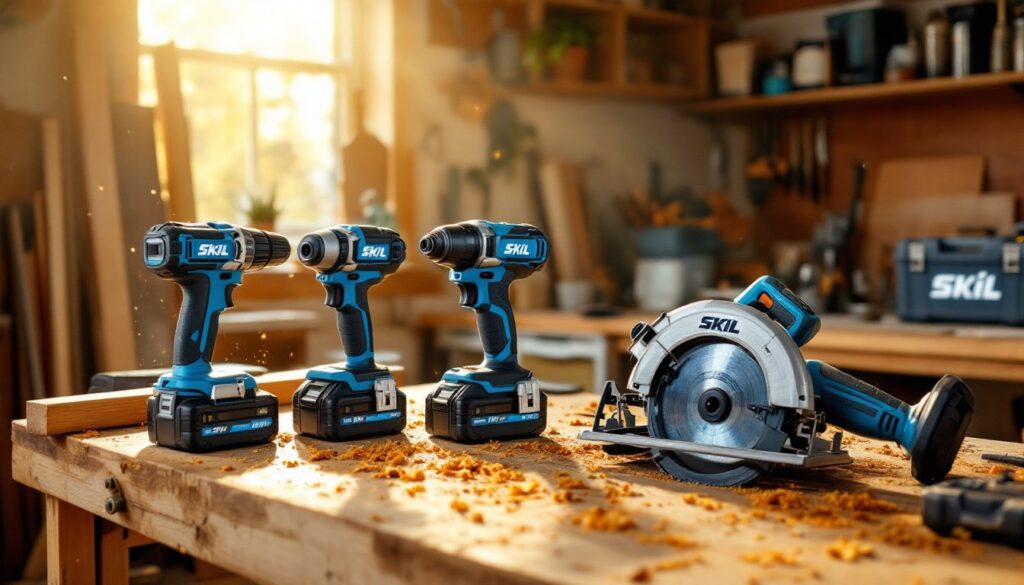
The SKIL 20V Drill/Driver is a logical starting point for anyone building a workshop. It’s compact enough to use one-handed in tight spaces (like drilling pilot holes for cabinet hinges) but has enough torque to drive lag bolts into a deck frame. The two-speed transmission, 570 and 1,500 RPM, means you can shift down for high-torque work like driving 3-inch deck screws, or shift up for faster drilling through drywall and thin lumber.
For fastening work, a dedicated impact driver saves your wrist from twisting. SKIL’s 20V Impact Driver delivers rotational force that overpowers resistance when driving long screws into treated lumber or lag bolts into framing. If you only buy two cordless tools, a drill and an impact driver are the right pairing.
SKIL Saws and Cutting Tools
A 7-1/4″ circular saw is the workhorse for most DIY projects, rough-cutting lumber for framing, ripping boards, and crosscutting. SKIL’s cordless circular saws cut cleanly through 2x lumber at full depth (1-1/2 actual inches) and maintain speed under load better than entry-level models. The shoe (base plate) is steel, not plastic, so it resists warping when you make repeated bevel cuts.
For finer work, a reciprocating saw excels at demolition, cutting old drywall, removing studs, cutting pipe. It’s brutal and efficient, which is exactly what you need when gutting a bathroom. You’re not worried about finish quality: you just want speed and power.
Based on hands-on testing by trusted reviewers, the best Skil saws deliver clean cuts and consistent performance across different materials. Pair a circular saw with a miter saw (10″ or 12″) when your projects require precise angle cuts, crown molding, door jambs, trim work. A miter saw’s sliding fence keeps your work square and produces clean cross-cuts you can’t achieve with a handheld saw.
How to Choose the Right SKIL Power Tool for Your Project
Start by asking what the tool needs to do, not what sounds impressive. A homeowner repainting bedrooms and hanging wall-mounted shelves doesn’t need a professional-grade orbital sander: a basic palm sander with 120-grit sandpaper handles drywall dings and surface prep. Someone building a fence or deck, though, benefits from a cordless drill/driver and impact driver.
Match the tool to the material. Cutting hardwood requires a sharp blade and a saw that maintains speed: SKIL’s carbide-toothed blades (the standard, not the budget steel blades) cut hardwood cleanly. For ripping plywood, a blade with fewer teeth (24-tooth rather than 40-tooth) clears sawdust faster and reduces binding.
Consider your workspace and storage. Cordless tools take up less space than corded ones, and SKIL’s battery-powered lineup lets you work away from outlets. But, cordless tools aren’t infinitely powerful, if you’re running a tool for 3+ continuous hours, corded options maintain consistent power without battery fatigue.
Battery capacity matters if you’re tackling larger projects. A 2.0Ah battery handles basic drilling and fastening: a 4.0Ah battery keeps you working through a deck-building day without swaps. Having two batteries ensures one is always charging while you work.
When researching tools before buying, skilled DIY builders and professionals highlight specific tool recommendations to compare features and performance. Reading what others used for similar projects removes guesswork.
Maintenance Tips to Keep Your SKIL Tools in Top Shape
Power tools last longer and perform better with basic care. After each use, blow out dust from vents and around the motor housing using compressed air or a shop vacuum. Dust buildup traps heat and forces the motor to work harder.
Batteries deserve attention too. Store them indoors in a climate-controlled space, cold garages or hot sheds degrade charge and lifespan. Avoid leaving batteries fully charged for months: a partial charge (about 50%) is ideal for long storage. Replace batteries that won’t hold a charge: trying to resurrect dead packs wastes time and money.
Blades and bits dull faster than you’d expect. A dull saw blade produces tear-out and burns wood: replace it rather than forcing it through material. A dull drill bit overheats and breaks, especially in hardwood. Inspect bits before starting work. Chuck keys should be removed immediately after drilling, leaving one in creates a flying projectile if the drill binds.
Store tools in a dry space. Moisture causes corrosion on metal components and triggers mold on batteries and internal electronics. A plastic storage case or wall-mounted rack with a cover works. If you notice rust or discoloration on the shoe or housing, wipe it with a dry cloth and a light machine oil.
Safety gear extends your working life, not just your tool’s. Always wear safety glasses when drilling overhead or cutting, dust and wood chips fly fast. Wear hearing protection with circular saws and impact drivers (they’re loud). For fine dust, a dust mask is non-negotiable. Proper tool usage and.
Conclusion
SKIL power tools won’t impress the guy with a tricked-out contractor’s rig, but they’ll get your project done reliably and affordably. Whether you’re a first-timer hanging a TV or an experienced DIYer tackling a renovation, choosing tools that match your project scope and maintaining them properly sets you up for success. Start with a drill/driver and impact driver, add saws as projects demand, and keep your gear clean and stored properly. Your future self, covered in sawdust but proud of completed work, will thank you.