
Table of Contents
ToggleIf you’ve ever stood in front of a yard project and thought, “I need better tools,” you’re not alone. Milwaukee has become the go-to brand for homeowners who want professional-quality yard equipment without the contractor price tag. Whether you’re building a raised garden bed, trimming hedges, or tackling landscape work, Milwaukee yard tools deliver durability and performance that last through seasons of heavy use. This guide breaks down what separates Milwaukee from the crowd, which tools actually matter for your projects, and how to build a system that grows with your needs.
Key Takeaways
- Milwaukee yard tools offer professional-grade durability and performance at homeowner-friendly prices, with brushless motor technology that delivers longer runtime and less downtime between charges.
- The M18 battery platform provides a modular ecosystem where batteries are interchangeable across mowers, trimmers, drills, and blowers, saving money and workspace over time.
- Essential Milwaukee tools for most homeowners include a compact drill/driver, impact driver, 19-inch lawn mower, string trimmer, and leaf blower—all powering from the same M18 battery system.
- Start with M18 batteries in the 2.0Ah to 3.0Ah range and upgrade to 5.0Ah or 6.0Ah for extended yard work; newer Redlithium batteries hold charge longer in cold weather.
- Regular maintenance—cleaning debris, sharpening mower blades every 20-30 hours, replacing worn trimmer line, and proper battery storage at 50–85°F—extends tool lifespan to 3-5+ years.
Why Milwaukee Dominates the Yard Tool Market
Milwaukee’s reputation comes from listening to professionals first, then translating that expertise into homeowner-friendly products. The company invests heavily in brushless motor technology, which runs cooler and more efficiently than older brushed designs, you get longer runtime and less downtime between charges.
Their M18 and M12 battery platforms are the backbone of their yard lineup. These standardized systems mean you’re not locked into buying entire tool kits: you can mix and match based on what you actually need. A battery that powers your drill also runs your mower, trimmer, and blower. Over time, that modularity saves money and clears workshop clutter.
Durability matters too. Milwaukee tools are engineered for job-site abuse, reinforced housing, metal gears in high-stress areas, and seals that keep dust and moisture out. Most homeowners find their Milwaukee equipment outlasts cheaper alternatives by years. The warranty support is straightforward: if something breaks, the company backs it up without endless paperwork.
Essential Milwaukee Yard Tools for Every DIY Homeowner
Not every homeowner needs every tool, but a few core pieces handle the vast majority of yard work. Here’s what makes sense to invest in:
Cordless Drills and Impact Drivers
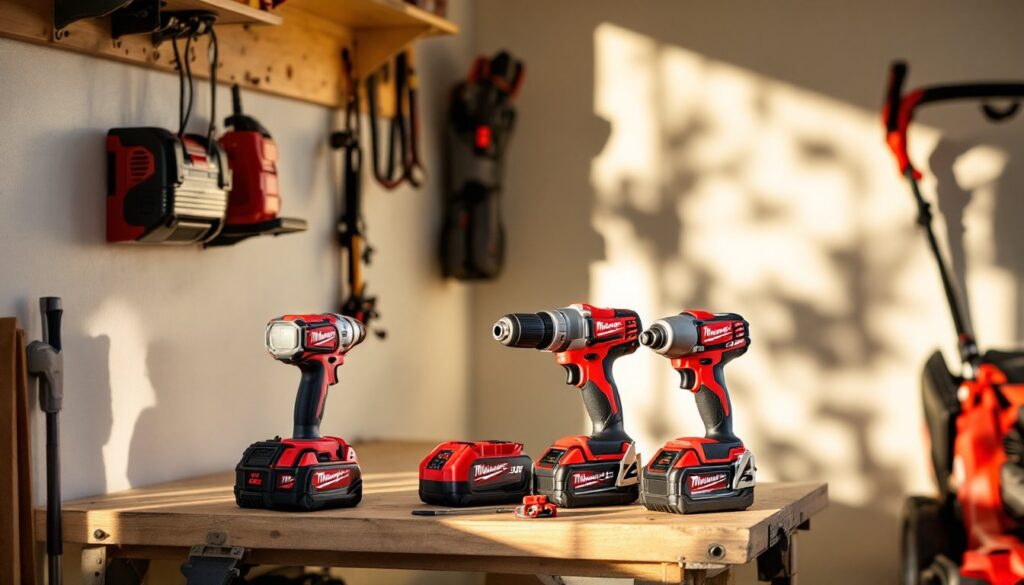
A Milwaukee M18 compact drill/driver is the workhorse for outdoor projects. It handles driving screws into treated lumber, drilling pilot holes for fence posts, and assembling raised beds without bogging down. The compact size keeps wrist fatigue low during repetitive work.
For heavier fastening, think exterior trim or deck building, an impact driver is worth the extra investment. It applies rotational force in quick bursts, making it nearly impossible to strip screws in pressure-treated wood or snap fasteners. Most homeowners find a drill and impact driver combo solves 95% of fastening needs.
Both tool types come in the M18 line, which means they share batteries. A single M18 5.0Ah battery powers either tool for most half-day projects. For bigger jobs, a second battery means continuous work without charging downtime.
Lawn Mowers and Trimming Equipment
Milwaukee’s cordless M18 lawn mower cuts a 19-inch swath and handles most suburban yards on a single charge. The deck is durable steel, the blade engagement is smooth, and the cutting height adjusts from 1.5 to 3.5 inches. It’s quieter than gas equivalents and requires zero fuel mixing, a huge quality-of-life improvement if you’ve wrestled with small-engine maintenance.
For edges and trimming, the M18 string trimmer uses the same battery system. A 0.080-inch line handles thick weeds and grass edges cleanly. The shaft is slightly lighter than professional models, which matters if you’re doing trimming for 30+ minutes straight.
A leaf blower rounds out the yard arsenal. Milwaukee offers compact M18 models that move debris quickly without the noise or emissions of gas units. All three tools, mower, trimmer, blower, operate on the same batteries, so you’re not juggling multiple charging systems.
Choosing the Right Battery System for Your Projects
Milwaukee’s M18 platform is the sweet spot for most homeowners. The M18 batteries range from 1.5Ah (compact, lighter) to 9.0Ah (extended runtime). Start with at least a 2.0Ah or 3.0Ah battery pair if you’re buying new, one charging while you work with the other. For heavy yard work or multiple projects in a single day, a 5.0Ah or 6.0Ah is a better long-term choice.
The M12 platform is smaller and lighter, ideal for detail work or interior projects, but yard tools need more sustained power. M12 batteries drain quickly on a mower or prolonged trimming, stick with M18 for outdoor equipment.
One often-overlooked detail: battery chemistry matters. Milwaukee’s newer Redlithium batteries hold charge longer in cold weather and sustain voltage throughout the discharge cycle, meaning tools run at full power until the battery is nearly empty. If you live in a climate with cool springs or falls, the extra cost pays back in usable runtime.
Invest in a dual-port charger, not the single-port model. You’ll cut charging time in half when juggling two batteries. A charger on a workshop outlet means batteries are always ready when you walk out to start a project. The wireless battery temperature sensors in newer chargers prevent overheating, extending battery life significantly.
Maintenance Tips to Extend Tool Life
Milwaukee tools are built tough, but a few habits keep them performing like new for years.
Cleaning is non-negotiable. After mowing or trimming, brush grass clippings and debris from the deck and motor housing with a dry brush, not water. Wet debris can creep into the motor compartment and cause corrosion. For the mower deck, flip it and scrape dried grass from the blade mounting area every few uses.
Blade and string care matters. A dull mower blade tears grass instead of cutting it cleanly, stressing the motor and inviting disease into your lawn. Sharpen the blade every 20-30 mowing hours, or twice a season for typical homeowner use. For trimmers, replace the string when it wears below 0.060 inches: worn line forces the motor to work harder.
Battery storage is critical. If you’re storing tools for winter, keep batteries in a cool, dry place (50–85°F is ideal). Don’t leave them on a charger constantly: remove batteries once fully charged. Storing a discharged battery can degrade it permanently. Most Milwaukee batteries last 3-5 years with proper care, and replacement costs drop yearly as the technology matures.
Check power tool fasteners regularly. Vibration can loosen housing screws over time. A quick check every month or two prevents small issues from becoming safety hazards. Most Milwaukee tools accept standard fasteners, so replacement parts are inexpensive. Regular inspection of woodworking project plans and tool maintenance guides helps you stay on top of preventive care, ensuring your equipment remains reliable season after season.
Conclusion
Milwaukee yard tools deliver the durability and power that justify the initial investment. By starting with core pieces, a drill, impact driver, mower, and trimmer, and building around a shared M18 battery platform, you’re creating a flexible system that handles today’s projects and tomorrow’s ambitions. Proper maintenance and smart battery management stretch that investment further, turning an expensive purchase into a decades-long partnership with tools that actually work when you need them.