
Table of Contents
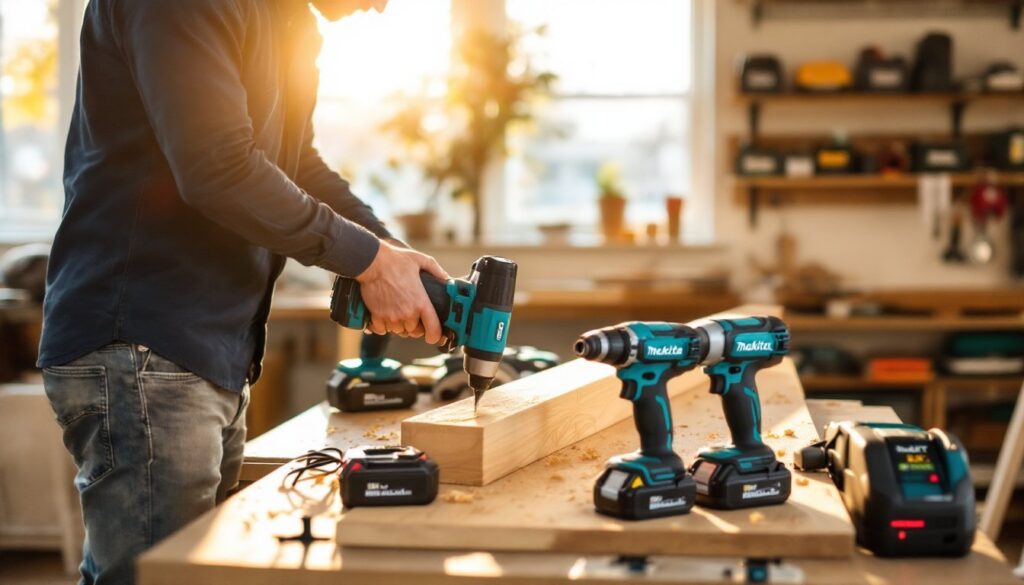
ToggleWhether you’re hanging shelves, building a deck, or tackling a kitchen remodel, Makita 18V tools deliver serious performance without the bulk or cost of corded equipment. The 18V LXT platform has become the backbone of home shops across the country, not because of marketing, but because the tools work reliably and fit real projects without overcomplication. If you’re starting from scratch or filling gaps in your collection, understanding what Makita 18V offers helps you spend smarter and build a kit that actually gets used. This guide walks through the essentials, battery systems, and how they stack against other brands so you can make a confident choice.
Key Takeaways
- Makita 18V tools balance power, weight, and compatibility, making them ideal for homeowners tackling projects from shelves to kitchen remodels without the bulk of corded equipment.
- A drill-driver and impact driver pair serve as the foundation for Makita 18V collections, handling 80% of interior home projects with a single battery ecosystem.
- Investing in brushless Makita 18V tools and multiple high-capacity batteries (3.0–5.0 Ah) with a dual-port charger maximizes runtime and reduces project downtime.
- Makita’s extensive 18V LXT lineup of over 120 tools—from circular saws to angle grinders—prevents ecosystem fragmentation and makes it easier to expand your kit with specialized tools.
- Build your collection strategically by starting with a $100–150 combo kit, adding tools based on upcoming projects rather than impulse, and considering rental or secondhand options for single-use tools.
Why Makita 18V Is The Smart Choice For Home Projects
Makita’s 18V LXT system became popular because it balances power, weight, and compatibility. An 18V drill weighs roughly half what a comparable corded model does, yet delivers enough torque for driving 3.5-inch deck screws or boring through doubled-up studs without bogging down. Unlike entry-level 12V systems that struggle with dense materials, 18V handles both light trim work and medium-duty construction tasks without being oversized for a simple wall anchor.
The real advantage is ecosystem compatibility. Once you own one 18V battery, it works across Makita’s entire LXT lineup, from impact drivers to angle grinders to job site radios. That means you’re not buying separate batteries for each tool or maintaining incompatible systems. Homeowners who start with a drill and later add a circular saw or reciprocating saw don’t face a dead-end ecosystem.
Build quality matters, too. Makita tools come with robust gearboxes, brushless motors on most models, and ball-bearing chuck designs that hold bits tight through years of use. The ergonomics are practical: grips fit standard hand sizes without feeling oversized, and controls are intuitive. You won’t find Instagram-worthy styling, but you will find tools that work when you reach for them at 7 a.m. on a Saturday.
Essential Makita 18V Tools Every Homeowner Should Own
Cordless Drill-Drivers And Impact Drivers
A 18V cordless drill-driver is the foundation. Models like the DCD777 or DCD791 deliver 300–400 units of torque, enough to drive 2.5-inch deck screws into pressure-treated lumber without stalling, yet light enough to use one-handed for overhead work. The 13-millimeter (half-inch) single-sleeve chuck grips bits securely without slipping, and two-speed transmissions (0–450 RPM in low, up to 1,300 RPM in high) let you choose power or speed depending on the task.
An impact driver like the DTD151 handles fastening work faster and with less wrist strain. Impact drivers deliver rotational bursts that prevent cam-out, that annoying spin-out when a screw head twists before fully seating. They’re lighter than drill-drivers and built to drive 3-inch structural fasteners into engineered lumber or bolting down joist hangers. If you’re hanging drywall, installing kitchen cabinets, or assembling anything with multiple fasteners, an impact driver cuts time significantly.
Pair these tools and you’re equipped for 80% of interior home projects. The drill handles drilling holes cleanly: the impact driver owns fastening.
Saws And Cutting Tools
A 6.5-inch circular saw (model CS553) cuts 2x lumber at depth with a single charge and weighs just 3.5 pounds. Crosscuts feel clean, and the laser guide helps track straight lines without marking the workpiece. For framing, installing subfloor, or ripping trim, a cordless circular saw beats dragging an extension cord around.
If you’re making finish cuts in trim or doing miter joints, a cordless miter saw or reciprocating saw fills a critical gap. A reciprocating saw handles demolition, cutting through nails and old framing, while a miter saw (larger, stationary tool) produces clean crosscuts on baseboards and crown molding. Many DIYers start with a reciprocating saw because it handles more situations, cutting openings in drywall, trimming door frames, cutting PVC pipe, and stores compactly.
These three saws, circular, miter or reciprocating, and a jigsaw for curves, cover 95% of home cutting needs. All run on the same 18V batteries, so you’re not juggling five different power sources.
Battery And Charging Systems That Keep You Working
Makita 18V LXT batteries come in 1.3 Ah, 2.0 Ah, 3.0 Ah, and 5.0 Ah capacities. Higher amp-hours mean longer runtime between charges, a 5.0 Ah battery runs a drill roughly 75 minutes on continuous light work, while a 1.3 Ah runs about 20 minutes. For a weekend project, one 5.0 Ah battery and one 3.0 Ah battery gives you flexibility: one charging while you work with the other.
Brushed motors drain batteries faster than brushless designs, so if you’re buying new, prioritize brushless 18V tools. They’re typically 20–30% more efficient and produce less heat, extending battery lifespan. A brushless drill or impact driver costs a bit more upfront but saves money on replacement batteries over 5–10 years.
Charging stations matter. A single-port charger handles one battery at a time: a dual-port charger finishes a pair in parallel. If you own four batteries, one in use, three cycling, you don’t face wait time between projects. Fast chargers can refill a 3.0 Ah battery in under 30 minutes, which is worth the investment if you’re actively working.
Battery care extends lifespan. Store them in a cool, dry place: don’t leave them drained over winter. Most Makita 18V LXT batteries hold charge reliably for 3–5 years with normal home-use cycling, though that varies with frequency and environment.
Makita 18V Vs. Competing Brands: What Sets It Apart
DeWalt’s 20V MAX and Milwaukee’s M18 are the main competitors. All three brands offer similar power levels and ecosystem breadth. Here’s where Makita stands out:
Weight and ergonomics: Makita 18V tools average slightly lighter than equivalent DeWalt 20V or Milwaukee M18 models. That difference, 0.2–0.5 pounds, adds up over a full day of overhead work or extended drilling.
Battery compatibility: Once you commit to one system, Makita’s LXT batteries work across every 18V LXT tool without adapters. DeWalt and Milwaukee match that integration within their platforms, so it’s less about Makita being unique and more about avoiding fragmentation.
Tool variety: Makita offers one of the broadest LXT lineups, over 120 tools run on 18V LXT batteries. If you need a specific tool (angle grinder, impact wrench, wet/dry vacuum, job site radio), Makita likely has it. That breadth means fewer compromises when expanding your kit.
Cost: Entry-level Makita drill kits often run $30–50 less than equivalent DeWalt or Milwaukee bundles, though prices fluctuate. Individual tools are competitively priced across brands: Makita doesn’t have a cost advantage, but it rarely costs more for the same capability.
The real differentiator is tool selection and platform consistency. If you find yourself needing specialized tools, a specific oscillating multi-tool, a light-duty circular saw, or a cordless reciprocating saw, Makita’s range makes it easier to stay within one ecosystem rather than picking up a second brand.
Building Your Makita 18V Collection: A Budget-Friendly Approach
Start with a combo kit. A drill-driver and impact driver pair, bundled with two batteries and a charger, typically costs $100–150. That’s your foundation. Over the next month, add a reciprocating saw ($100–120 bare tool) and a 5.0 Ah battery ($60–80). You’ve now got four core tools and solid runtime for roughly $280–350 total.
Before buying anything, ask: “What’s the next project?” If it’s framing or demolition, prioritize a reciprocating saw. If it’s trim work or cabinetry, a miter saw fills that gap. Buying tools for projects you haven’t planned yet leads to a crowded shop and unused equipment.
Secondhand Makita 18V tools are worth considering. Brushless motors are newer (introduced around 2015), so look for newer used tools with brushless badges if possible. Batteries degrade over time, so factor replacement cost into used pricing, if a used drill costs $40 but needs a $70 battery, it’s not the bargain it appears. Many homeowners buy professional-grade kits, use them once or twice, and sell them. Pawn shops, Facebook Marketplace, and estate sales are common sources.
Rent before buying for specialized tools. If you need a power planer, orbital sander, or table saw, tools used for one-off projects, rental makes sense. A power planer might cost $180 to buy but $25 to rent for a day. Rent expensive, single-use tools: buy the ones you’ll reach for monthly.
Compare bare tool vs. kit pricing. Buying tools individually (“bare tool,” battery not included) often costs less per unit than buying another combo kit. Once you have two batteries and a charger, buying three bare tools for $270 ($90 each) beats buying a $350 combo kit that duplicates batteries you already own.
Many DIYers building a collection use platforms like 13 Best Makita Cordless Tools to compare capabilities and read real-world feedback. Instructables and The Handyman’s Daughter offer detailed project walkthroughs that show which tools actually get used for beginner-friendly builds, a smart way to prioritize your purchases before spending.
Building Your Makita 18V Collection: Real Projects, Real Tools
Makita 18V tools work because they’re engineered for actual home projects, not marketing fantasies. They’re light enough to use comfortably for hours, tough enough to handle demanding work, and part of an ecosystem broad enough that you won’t outgrow it. Start with a basic combo kit, add tools as projects demand, and prioritize your money toward batteries and chargers, the foundation everything else depends on. The best tool kit is the one you finish projects with, not the one that sits unused because it was bought on impulse.