
Table of Contents
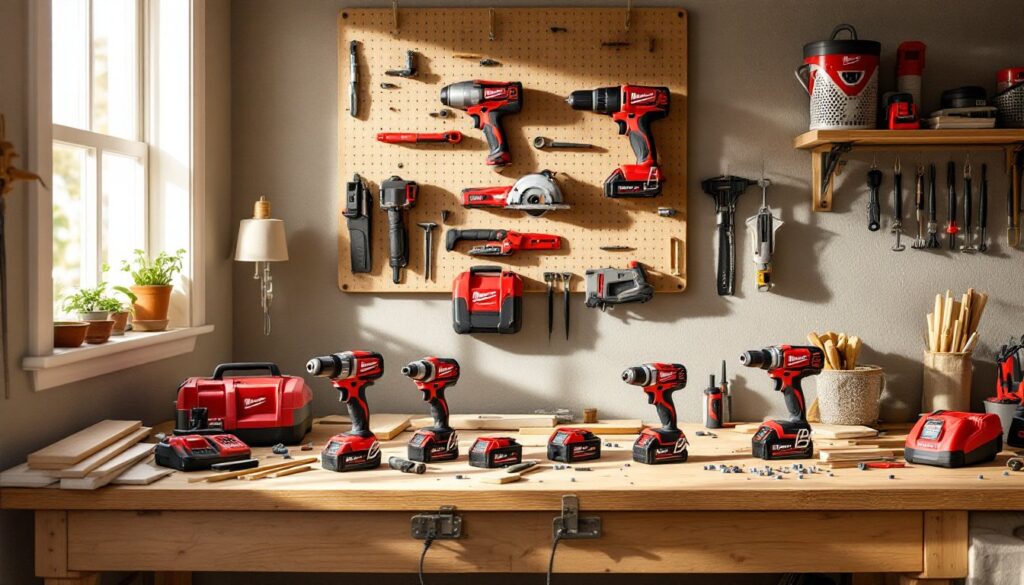
ToggleMilwaukee’s M12 system has quietly become the go-to choice for homeowners tackling everything from hanging drywall to assembling deck railings. Unlike general-purpose power tools, the M12 platform is a coordinated ecosystem, compact, lightweight, and built around a common battery system that makes sense for projects around the house. Whether you’re upgrading from corded tools or considering your first cordless system, understanding what M12 tools bring to your workshop can save you time, frustration, and money. This guide walks through the M12 platform’s strengths, battery performance, which tools actually matter for home projects, and how to think about long-term value versus upfront cost.
Key Takeaways
- The Milwaukee M12 system is a lightweight, compact 12-volt battery ecosystem designed specifically for homeowners tackling interior and light exterior projects, weighing significantly less than full-size power tools.
- M12 batteries use REDLITHIUM technology that maintains power output over time and performs better in cold temperatures, with runtime varying from 40–80 fasteners depending on battery capacity and tool demand.
- Essential M12 tools for home improvement include the compact drill-driver for basic fastening, impact drivers for large fasteners, circular saws for cutting, and reciprocating saws for demolition—with each tool compatible across the shared battery platform.
- An M12 starter kit costs $200–$350 and pays for itself in 8–12 tool rentals, making ownership more economical than renting for homeowners planning multiple projects over 2–3 years.
- Once you invest in an M12 battery and charger, you can expand your tool collection affordably since additional tools only require purchasing the tool itself without duplicating batteries or chargers.
What Makes The M12 System Stand Out
The Milwaukee M12 system isn’t just a single tool, it’s a platform built around a 12-volt battery ecosystem that prioritizes compact size and lightweight handling. This matters for home projects because you’re often working in tight spaces: inside cabinets, under sinks, in crawl spaces, or overhead. Where a full-size 18-volt or 20-volt cordless drill becomes a fatigue factor after an hour or two, an M12 drill feels like an extension of your hand.
Milwaukee designed M12 tools with homeowner-scale projects in mind. That doesn’t mean they’re underpowered, it means they’re engineered to deliver enough torque and speed for fastening, drilling, and light demolition without the overkill weight. A Milwaukee M12 compact drill weighs around 3.6 pounds compared to 5+ pounds for larger cousins. Over a Saturday spent assembling shelving or upgrading interior doors, that difference adds up.
The ecosystem advantage is real. Once you own one M12 battery and charger, you can buy any M12 tool and it works immediately. That’s different from buying into fragmented tool brands where you’re stuck with incompatible batteries. Milwaukee’s M12 lineup includes over 100 tools across drilling, driving, cutting, and fastening categories. You buy what you need now and expand later without duplicating batteries.
Battery Technology And Runtime Performance
Milwaukee M12 batteries come in two chemistries: lithium-ion (standard) and REDLITHIUM (their premium line). The REDLITHIUM cells hold charge longer in storage, handle cold temperatures better, and maintain power output over the battery’s lifespan. For a homeowner, that means a 3-year-old battery still delivers close to its original punch, not the gradual fade you’d experience with older nickel-cadmium or older lithium tech.
Runtime varies based on the battery capacity and the tool’s demand. A Milwaukee M12 compact drill with a 1.5 Ah battery handles around 40-50 fasteners or light drilling before needing a swap. A 2.0 Ah battery extends that to 60-80 fasteners. Real-world projects like assembling a bookcase, hanging 20 shelves, or fastening cabinet hinges typically run on one battery without a pit stop. Heavier jobs, like driving 2.5-inch deck screws or using impact drivers, pull faster: a 2.0 Ah battery might last 30-40 fasteners.
The charger matters too. Milwaukee’s 30-minute chargers are standard and convenient for casual use. Their compact chargers weigh less and charge slower (45-60 minutes). For a DIYer working one or two weekends a month, owning two batteries (rotate them through the charger) and a 30-minute unit handles nearly any task. Heavy hobbyists sometimes add a second charger to their bench. Cold temperatures significantly reduce runtime, expect 20-30% less output below 32°F.
Essential M12 Tools For Home Improvement Projects
Drills, Drivers, And Impact Tools
The Milwaukee M12 compact drill-driver is the foundation of the system. It handles general fastening, drilling into wood and soft materials, and basic fastening tasks. For hanging pictures, assembling shelving, installing cabinet hardware, and light construction, it’s all you need. If you do frequent work with larger fasteners or denser materials, the M12 fuel drill-driver adds a brushless motor that delivers more sustained torque and longer runtime per charge.
An impact driver is worth considering if you regularly work with deck screws, large fasteners, or anything requiring bits of speed and precision. The M12 impact driver weighs 2.6 pounds and delivers 1500 inch-pounds of torque, enough for fastening pressure-treated lumber or driving 3.5-inch deck fasteners. Many homeowners discover that an impact driver transforms fastening speed: it’s not just faster, it’s more comfortable because the tool does the turning instead of your wrist absorbing rotational stress. A detailed review of Milwaukee’s M12 tools breaks down torque specs and real-world performance across the lineup.
Saws And Cutting Tools
The Milwaukee M12 compact circular saw is compact (7.5 inches) and weighs 3.2 pounds, making it ideal for rip cuts in trim, plywood edge cuts, and general crosscutting in confined spaces. The blade runs at 3700 rpm and handles standard 6.5-inch blades. For framing work or long rips, a corded 7.25-inch saw or a miter saw is faster and more stable, but for one-off cuts or interior finish work, the M12 circular saw eliminates the extension cord hassle.
The Milwaukee M12 reciprocating saw is a game-changer for demolition and rough cutting. At 6.5 pounds with a 3/8-inch stroke, it handles drywall removal, cutting pipe, trimming studs, and removing fasteners. It’s loud and produces vibration (wear hearing protection and safety glasses), but for a weekend renovation involving any drywall or structural trim removal, it saves hours compared to hand tools.
For finer work, Milwaukee’s M12 oscillating multi-tool (with Starlock quick-change blade system) handles drywall patching, grout removal, tight corner trim, and detail work. It’s slower than stationary power tools but invaluable when you need control in tight spaces. A broad list of the best Milwaukee M12 tools includes these saws alongside other heavy hitters with real performance comparisons.
Budget Considerations And Long-Term Value
An M12 starter kit (drill-driver, impact driver, two batteries, and charger) typically runs $200–$350 depending on sales and retailer. Standalone tools range from $60–$150 depending on complexity. That’s entry-level compared to full-size systems, but it’s real money, so understanding value makes sense.
The math shifts when you account for durability and ecosystem. A Milwaukee M12 drill lasts 5–10 years of regular weekend use with reasonable care. Once you own batteries and a charger, each additional tool costs only the tool itself, no redundant chargers or incompatible batteries eating budget. A homeowner buying three to four M12 tools over five years spends less total than buying separate cordless systems from different brands.
Compare the cost per job too. Renting a circular saw for a weekend costs $15–$25. Renting a reciprocating saw for demolition runs $20–$30. Buying an M12 combo kit breaks even after 8–12 rentals, and then you own the tools for future projects. If you’re planning a kitchen renovation, bathroom remodel, or deck project, ownership pays off quickly.
One caveat: if your projects are truly rare (once every few years, light fastening only), renting might stay cheaper. But for anyone planning multiple projects in the next 2–3 years or wanting tools ready for unexpected repairs, the Milwaukee M12 platform offers good value. Battery replacement costs are another factor, replacement batteries run $30–$80 depending on capacity, a reasonable cost compared to replacing entire tool units.
Conclusion
The Milwaukee M12 system delivers genuine practicality for homeowners and DIYers tackling interior and light exterior projects. The compact size, shared battery ecosystem, and broad tool selection mean you’re not overspending on power you don’t need or dealing with compatibility headaches. Start with a drill-driver and assess from there. If your projects involve fastening, drilling, or occasional cutting, the M12 platform earns its place in your workshop. DIY project resources can guide your first project, start simple, build confidence, and expand your M12 collection as projects demand.