
Table of Contents
ToggleIf you’ve been eyeing power tools for your home projects but felt overwhelmed by the options, the Milwaukee M18 system deserves a hard look. It’s a cordless platform that cuts through most DIY tasks with genuine efficiency, from hanging shelves to framing out a deck. Unlike owning a random collection of single-battery tools, the M18 ecosystem lets you swap batteries between multiple tools, saving money and frustration. This guide breaks down what makes the system tick, which tools matter for homeowners, and how to decide if it’s the right fit for your workshop.
Key Takeaways
- The Milwaukee M18 system is an 18-volt cordless platform with interchangeable batteries and brushless motors that work across dozens of tools, eliminating the need for multiple chargers and battery types.
- A drill driver and reciprocating saw combo covers roughly 80% of typical homeowner projects, with predictable runtime—a 5.0 Ah battery delivers 100-150 fasteners before requiring a swap.
- Milwaukee M18 FUEL batteries hold 85%+ charge after three weeks of storage and maintain 80% capacity after two to three years of regular use, providing a five to seven year lifespan for typical homeowners.
- A starter M18 combo kit with drill driver, impact driver, two batteries, and charger costs $200-$350, making it an affordable entry point compared to owning single-battery tools.
- Invest in a rapid charger (30-45 minute recharge) and buy extra batteries to rotate during full-day projects—these conveniences pay for themselves within a few projects.
- Milwaukee M18 tools deliver consistent power, solid ergonomics, and reliable performance for DIY tasks from hanging shelves to framing decks without the hassle of pneumatic hoses or hunting for outlets.
What Is The Milwaukee M18 System?
The Milwaukee M18 is a 18-volt lithium-ion cordless platform engineered around interchangeable batteries and chargers. Think of it like a foundation, one battery pack and charger work across dozens of different tools. Milwaukee makes everything from compact drills to reciprocating saws, all running on the same M18 fuel cell.
The “FUEL” designation means brushless motors, which deliver more runtime and less maintenance than brushed alternatives. You don’t need to replace brushes, and the motor efficiency means fewer heat losses. For a homeowner tackling everything from assembly to demolition, this translates to tools that keep pace with your energy, not the other way around.
What makes this system practical is the battery ecosystem. A single 5.0 Ah or 6.0 Ah battery plugs into any M18 tool, and Milwaukee’s rapid chargers get most packs to 80% in under 30 minutes. No more waiting around mid-project, and no need to buy separate chargers for each tool.
Key Milwaukee M18 Tools For Homeowners
Drills, Drivers, And Fastening Tools
The M18 FUEL drill driver is the anchor tool in most homeowner setups. Its brushless motor delivers steady torque whether you’re driving 3-inch deck screws or boring through doubled-up studs for a shelf bracket. The compact head fits into tight spaces, a real advantage when working in corners or against framing.
For fastening, the M18 FUEL impact driver is a game-changer if you drive a lot of fasteners. It uses concussive rotational bursts rather than pure torque, so your wrist stays less fatigued and stripped screw heads become rare. Trim carpenters and deck builders live with these in their holsters. The difference between a drill and an impact driver isn’t just speed, it’s feel and control on stubborn fasteners.
The nailer lineup, including the M18 18-gauge brad nailer and finish nailer, eliminates hand-nailing for interior trim and cabinetry. No pneumatic hose, no compressor noise, and you’re not hauling 50 pounds of equipment for a weekend project.
Saws And Cutting Tools
The M18 reciprocating saw is indispensable for demolition and rough cuts. It powers through drywall, old lumber, and plastic with minimal resistance. A corded saw needs an outlet: the M18 goes wherever the project is.
For precision cuts in wood, the M18 FUEL miter saw (if you step up to a full-size model) or the M18 circular saw work cleanly. A circular saw, in particular, is lighter to hold overhead than corded alternatives and lets you move between cuts without hunting for outlets.
The M18 jigsaw cuts curves and tight angles in plywood and trim. Handy for custom notches around pipes or creating decorative edges in cabinet faces. It’s compact enough to store on a shelf but powerful enough for 3/4-inch hardwood.
A homeowner’s two-tool combo that covers most tasks: a drill driver and a reciprocating saw. Add a circular saw for framing or deck work, and you’ve covered roughly 80% of typical projects.
Why Milwaukee M18 Works For DIY Projects
First, runtime is predictable. A 5.0 Ah battery in a drill driver gives you roughly 100 to 150 fasteners (depending on material) before needing a swap. That’s usually enough for a full morning of hanging cabinets or framing out a single wall. You know what to expect, unlike some competitor brands that fade toward the end of a battery charge.
Second, the tool feel is solid. Brushless motors mean consistent power delivery throughout the charge cycle. The grip ergonomics on most M18 models are thoughtful, no awkward wrist angles after a few hours of repetitive driving or cutting. Trigger sensitivity is fine-tuned so you can throttle power for delicate trim work or go full-bore for aggressive cuts.
Third, the ecosystem scales with your needs. Start with a basic combo kit (drill + driver with one charger and batteries), then add a reciprocating saw, miter saw, or specialty tool as projects demand. You’ll never buy a second charger. That’s money and shelf space saved.
Fourth, reliability matters on a homeowner timeline. You can’t afford a tool dying mid-project on a Saturday. Milwaukee’s reputation here is strong, parts availability is good, warranties are reasonable, and the tools are engineered to handle occasional abuse without failing. Concrete drilling, overhead fastening, and repetitive cuts don’t faze M18 tools when used within their design envelope.
Battery Life And Charging Efficiency
Milwaukee uses true lithium-ion chemistry, not the cheaper lead-acid or older NiCd designs. This means batteries hold charge for months without meaningful self-discharge. Leave a fully charged M18 battery on your shelf for three weeks, and it’ll still have 85%+ capacity, useful for seasonal projects.
Charging speed is a practical advantage. The M18 rapid charger refreshes most batteries in 30 to 45 minutes, depending on amp-hour rating. Some users buy a second charger to keep one plugged in while working. That’s a modest investment that eliminates waiting time during a project day.
Battery degradation follows a predictable curve. A typical M18 FUEL battery holds 80% capacity after two to three years of regular use. In homeowner terms, one to three projects per month, you’re looking at five to seven years before swapping to a fresh pack. That’s a solid lifespan.
One caveat: cold weather reduces runtime. Below 50°F, expect 15% to 25% shorter run times. Store batteries indoors on winter projects, or warm them before use. It’s a physics thing, not a defect.
Budget Considerations And Getting Started
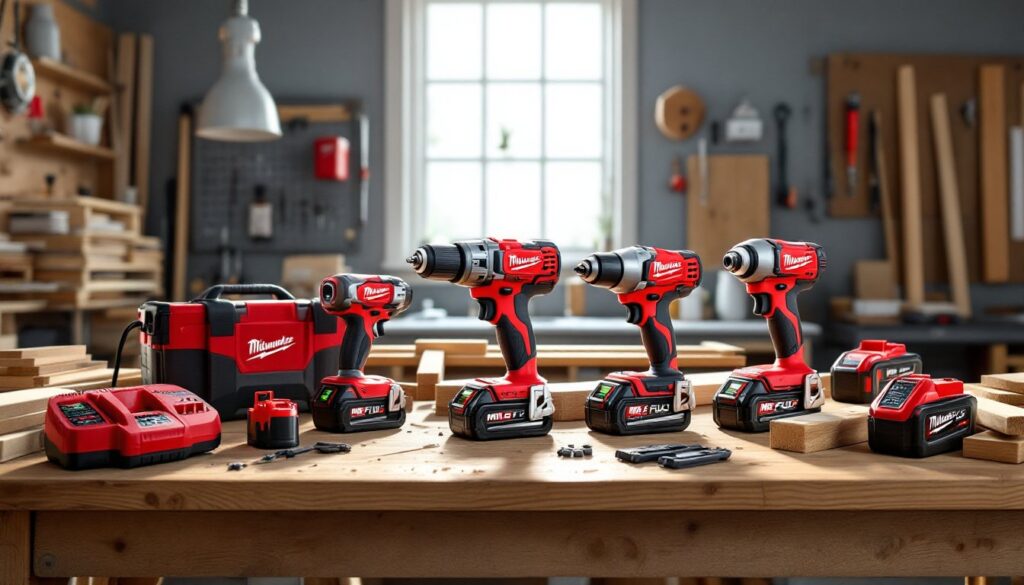
A starter M18 combo kit, drill driver, impact driver, two batteries, charger, runs between $200 and $350 depending on sales and retailer. That’s a genuine entry point for a system that’ll outlast several other brands. Building piecemeal is tempting but often costs more per tool.
Individual M18 tools range widely: compact impact drivers around $100 to $150 (tool only), full-size saws $200 to $400+. Premium FUEL models cost more upfront but deliver better efficiency and lifespan, a worthwhile trade if you’re using the tool regularly.
Battery costs are real. A 6.0 Ah replacement battery runs $80 to $120. Buying two batteries with a combo kit means you can rotate while one charges, a smart move for a full day of work. Extra batteries pay for themselves in convenience within a few projects.
You might also discover that Ace Hardware is clearing out Milwaukee tools for free with qualifying purchases, which can stretch your budget. Check local retailers for seasonal sales and clearance stock.
Don’t skimp on a charger. The rapid charger is worth the extra $40 to $60 over a standard unit. Time is real when you’re in the middle of a weekend project. Honestly assess how many tools you’ll actually use. A drill driver covers 70% of homeowner work: add a reciprocating saw for demolition, and you’re covered for most tasks. Specialty tools (nailers, sanders, blowers) are nice but not essential for a first toolkit.