
Table of Contents
ToggleIf you’ve spent the last few years borrowing tools from neighbors or limping along with a garage drawer full of corroded hand tools, it’s time to invest in a real Milwaukee tools set. Whether you’re tackling a bathroom remodel, building shelving, or replacing cabinet hardware, a quality cordless toolkit keeps projects moving without the tether of extension cords or the fume of gas engines. Milwaukee’s battery-powered lineup delivers the power and runtime that serious DIYers expect, with the reliability homeowners need when life doesn’t follow a work schedule. This guide walks you through what makes Milwaukee stand out, what’s in the popular combo kits, and how to pick the right set for your skill level and project scope.
Key Takeaways
- A Milwaukee tools set prioritizes battery longevity, brushless motor technology, and ergonomic design, making it ideal for DIY projects without the fumes or cord constraints of traditional tools.
- Invest in a 2-tool combo (drill and impact driver) as a first-timer, or upgrade to a 4-tool set with saws if you’re planning multi-day renovations—most combo kits cost $150–$450.
- Battery capacity and quantity matter more than tool count: two 3.0–5.0 Ah batteries provide continuous work, while a single charger creates downtime—invest in a second charger to maximize productivity.
- Milwaukee’s modular battery ecosystem lets you start small and grow your toolkit without replacing batteries or chargers, keeping expansion costs low and your workflow efficient.
- Honestly assess which tools you’ll actually use; most homeowners rely on cordless drills and impact drivers for 80% of household fastening work, while saws gather dust without renovation plans.
Why Milwaukee Tools Stand Out for Home Improvement Projects
Milwaukee has earned its reputation by focusing on what matters to DIYers: battery longevity, ergonomic design, and tools that don’t quit mid-project. Their brushless motor technology spins faster and runs cooler than brushed competitors, which extends both battery life and tool lifespan. A M18 or M12 cordless drill from Milwaukee won’t overheat after driving 200 screws: it’ll handle it quietly and move to the next job.
The ecosystem is another major advantage. Milwaukee tools share batteries across platforms, a M18 battery slides into dozens of tools. You’re not locked into buying proprietary batteries for every tool: one charge station powers your drill, impact driver, circular saw, and light. This modular approach also means you can start small and grow your collection without replacing the entire kit.
Build quality shows in the details. Chuck heads are metal, not plastic. Triggers are smooth and responsive, not mushy. Handles have a tactile grip even when wet or dusty. These touches matter on a 6-hour cabinet install, where a cheap tool’s spongy trigger or lightweight body gets fatiguing.
Essential Tools Included in Popular Milwaukee Combo Kits
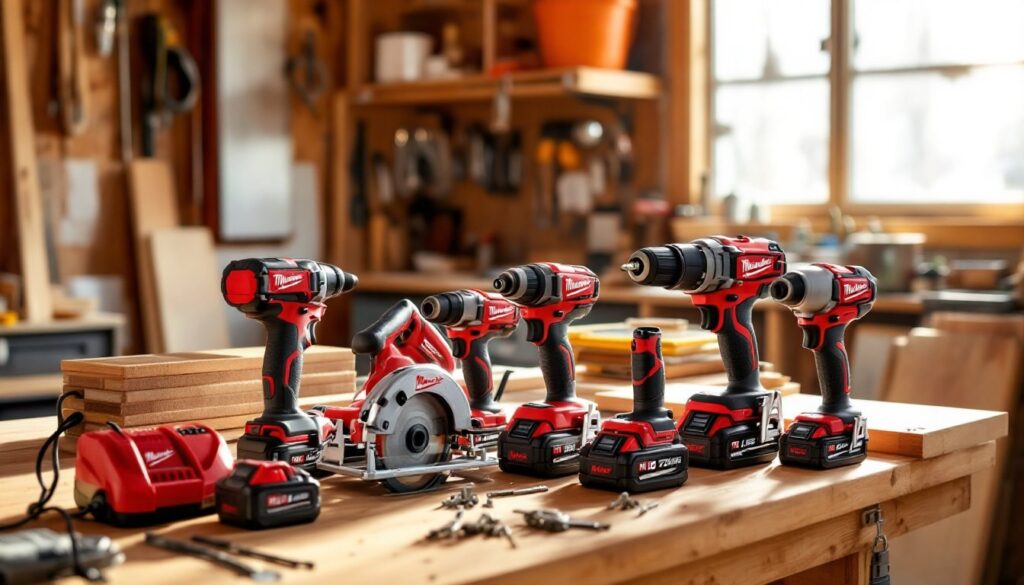
Most Milwaukee combo sets bundle 2–4 essential tools with a couple of batteries and a charger. Understanding what each tool does and whether you’ll actually use it prevents you from overpaying for redundant gear.
Cordless Drills and Drivers
The Milwaukee M18 Compact Drill/Driver is the workhorse. It’s lighter than full-size drills, fits tight spaces (like under sink cabinets), and still delivers enough torque to bore through pressure-treated lumber or drive lag bolts into studs. The 1/2″ chuck accepts standard bits, and dual-speed transmission (0–450 RPM and 0–1,500 RPM) lets you creep fasteners in delicate surfaces or speed through repetitive drilling.
A cordless drill is non-negotiable for any DIY kit. You’ll use it for everything from hanging drywall to assembling flat-pack furniture. Even if you hire out electrical work, the drill remains your most-reached-for tool.
Impact Drivers and Saws
The M18 Impact Driver looks like a drill’s stockier sibling, but it’s a different animal. Instead of continuous rotation, it delivers rapid bursts of rotational force, thousands of impacts per minute. Driving 3-inch deck screws into hardwood that’d bind up a regular drill is effortless with an impact driver. The trade-off: they’re louder and vibrate more, and they can over-torque fasteners if you’re not careful. For fastening tasks, especially in dense materials, an impact driver cuts time in half.
Many combo kits also include a reciprocating saw or circular saw. A reciprocating saw excels at demolition, cutting out old studs, trimming door frames, ripping caulk. A circular saw is better for crosscuts and ripping boards because you can guide it along a fence or straightedge. If you’re doing a kitchen renovation with lots of cabinet demolition, the reciprocating saw earns its spot. If you’re building new shelving or trim, the circular saw pays dividends. Some kits bundle both: others let you swap. Reviews from sources like The Best Milwaukee Tools of 2024 can help you see side-by-side comparisons of what’s included in each tier.
How to Choose the Right Milwaukee Tools Set for Your Needs
Choosing between a 2-tool kit, a 4-tool combo, and a full workshop setup depends on your project roadmap and skill level.
Start with a 2-tool combo if you’re a first-time DIYer or plan to tackle basic projects: hanging shelves, assembling furniture, driving fasteners, and light drilling. A drill and impact driver cover 80% of household fastening work. These kits cost $150–$250 and include one or two M18 batteries (typically 2.0 or 3.0 Ah capacity) and a charger. They’re a low-risk entry point.
Move to a 4-tool set if you’re planning multi-day projects or renovations that involve demolition, cutting, or drilling hard materials. Adding a reciprocating saw and circular saw ($300–$450 with batteries) gives you flexibility for remodeling jobs, cabinet removal, framing, cutting drywall patches. These kits suit homeowners tackling bathrooms, basements, or major interior updates.
Battery capacity and quantity matter more than tool count. A single 2.0 Ah battery dies quickly on demanding tasks. Two 3.0 or 5.0 Ah batteries let one charge while you work with the other. If you’re using a circular saw for hours, larger batteries (5.0–6.0 Ah) reduce downtime. Calculate runtime: most Milwaukee tools drain a 3.0 Ah battery in 30–60 minutes of heavy use.
Consider runtime on repetitive jobs. Driving 300 deck screws or ripping 50 feet of trim takes 1–2 hours. Two medium batteries or one large battery keeps you moving. Check job sites like Instructables for specific project timelines: a user building a workbench might log actual runtimes that guide your battery choice.
Budget for a second charger if you’re serious about projects. A single charger with two batteries means 30–45 minutes of wait time while one charges. A second charger ($80–$120) keeps both batteries topped off and cuts downtime to zero.
Honestly assess whether you’ll use all the tools. A reciprocating saw gathers dust in most homes: cordless drills and impact drivers are the daily drivers. Buying a combo with tools you’ll never touch wastes money. Modular kits let you add a circular saw or sander later once you know you need it.
Beginner woodworkers exploring joinery and furniture projects might benefit from consulting resources like The Handyman’s Daughter, which walks through beginner-friendly builds that reveal which tools actually get used repeatedly.
Conclusion
A Milwaukee tools set is an investment in efficiency and reliability, not a status symbol. Start with a 2-tool combo and the batteries you need for your immediate projects. Add tools as your skills and project scope grow. The battery ecosystem means every tool you add works with existing batteries, so expansion doesn’t reset your investment. Do the math on runtime for your specific jobs, and don’t skimp on battery quantity. Over a decade, quality cordless tools save time and frustration on every project.