
Table of Contents
ToggleIf you’ve spent the last few years watching Makita 40V tools gather dust on shelves while cheaper cordless models flood the market, you might wonder what the fuss is about. The truth? Makita’s 40V system delivers something that budget brands struggle to match: runtime, power, and a genuine ecosystem of accessories that actually work together. Whether you’re hanging shelves, building a deck, or tackling a kitchen remodel, understanding what Makita 40V offers, and how to use it wisely, can transform how you approach home projects. This guide walks you through the toolset, battery system, and practical strategies to get real work done without constantly charging or swapping tools.
Key Takeaways
- Makita 40V tools deliver roughly twice the battery capacity of 20V models, providing longer runtime and sustained power for demanding home projects without frequent charging.
- The 40V drill-driver and impact driver form the foundation of the system, with the drill-driver excelling at framing and fastening while the impact driver reduces hand fatigue on repetitive tasks.
- Makita 40V circular saws and miter saws enable single-pass cutting and corded-quality accuracy without the hassle of power cords, making them ideal for framing, decking, and trim work.
- Investing in a dual-port fast charger and maintaining at least two charged batteries on hand prevents project downtime and extends the lifespan of your 40V battery system.
- Makita 40V tools excel on intermittent home improvement tasks like drywall hanging, shelving, and deck construction, but sustained jobs like floor sanding may require corded or larger power equipment.
- Proper battery storage indoors, avoiding complete discharge, and using quality accessories like carbide-tipped blades maximizes performance and longevity across your entire Makita 40V ecosystem.
Why Makita 40V Tools Stand Out for Home Projects
Makita 40V tools occupy a sweet spot between consumer-grade compact drills and professional-grade corded equipment. The 40V lithium-ion battery delivers roughly twice the capacity of 20V batteries, meaning longer runtime on a single charge and genuine reserve power for sustained cutting or driving tasks. Most homeowners find a single 40V battery outlasts two or three smaller batteries on the same job.
The LXT 40V platform runs quieter than many 20V counterparts, partly because the motor doesn’t strain as hard to deliver the torque. You’ll notice this on jobs like drilling through pressure-treated lumber or driving 3-inch deck screws into hardwood, the tool maintains speed without bogging down. For anyone who’s felt a struggling underpowered drill slow to a crawl, this matters.
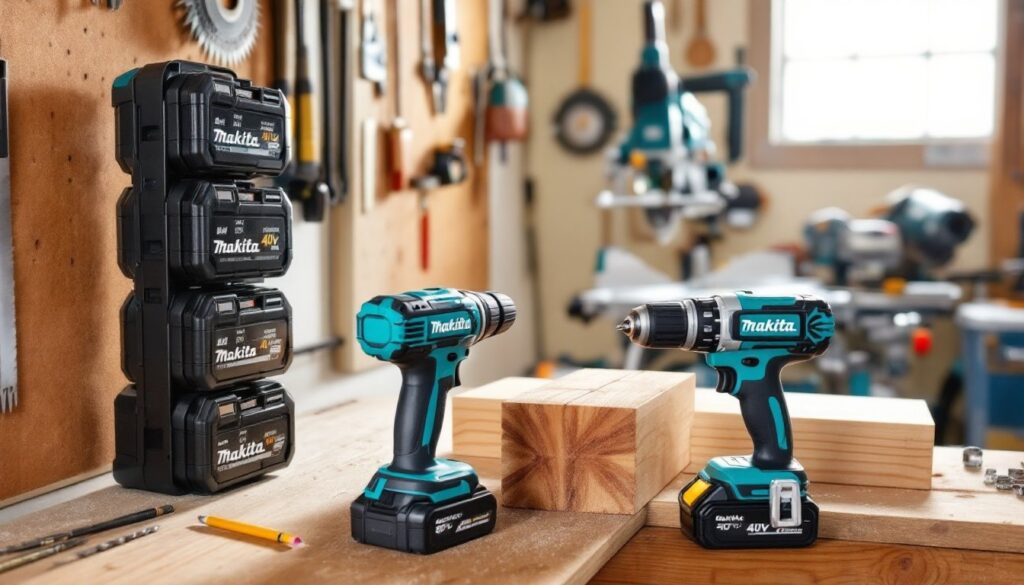
Makita also covers storage and organization better than most. The batteries stack vertically, and the charging dock sits neatly in a garage corner without eating up significant real estate. If your workshop space is tight, this efficiency adds up fast. Plus, the full suite means you’re not hunting for proprietary batteries across different brands: everything on the platform shares the same 40V cells.
Top Makita 40V Tools Every DIY Enthusiast Should Know
The Makita 40V lineup includes over 100 tools, but you don’t need to own all of them. Let’s focus on the ones that handle the majority of home projects.
Drills, Drivers, and Impact Tools
The 40V compact drill-driver (typically the DDF482) is the workhorse. It weighs under 4 pounds bare, balances well one-handed, and delivers enough torque for framing and fastening. If you’re mixing concrete or spending hours boring holes, fatigue creeps in with heavier models, this one keeps your wrist happy.
The 40V impact driver serves the same battery slot but focuses on rotational force. It’s ideal for driving ½-inch lag bolts into beams, fastening decking hardware, or removing stubborn fasteners. Impact drivers produce less fatigue than drill-drivers on repetitive fastening because the rotational strikes do the work, not your hand strength. Common impact driver mistakes often stem from over-tightening fasteners, but a good driver with adjustable power settings lets you dial in the right torque.
For finishing work, a 40V angle drill-driver fits into tight spaces, corner framing, cabinet interiors, or joist bays, where a straight drill won’t fit. Not essential for basic projects, but invaluable in tight quarters.
Saws and Cutting Equipment
Makita’s 40V circular saw cuts 2×8 lumber at a 45-degree angle in one pass, no flipping material or making two cuts. It’s lighter than corded models and runs quieter because the 40V motor doesn’t need the thermal grunt of 120V. For framing, fence repairs, or deck construction, this is your primary cutter. Always wear safety glasses and a dust mask when ripping lumber: sawdust contains silica in some materials.
The 40V reciprocating saw tackles demolition, pruning overgrown branches, and cutting drywall openings. A single 40V battery usually lasts through a full bathroom demo or removing an interior non-load-bearing wall. Pair it with a demolition blade for drywall or metal-cutting blades for plumbing rough-in work.
The 40V miter saw excels at crosscutting trim, molding, and framing. It delivers the accuracy and speed of a corded saw without a cord dragging across your work area. Bob Vila’s tool reviews frequently compare miter saw performance across platforms: Makita 40V models rank high for consistency and ease of setup. For crown molding, baseboard, or deck railing, this saw saves hours of measuring and hand-cutting.
Makita also makes a 40V band saw and plate jointer, but those serve specialized woodworking rather than general home improvement.
Battery and Charging System Essentials
The 40V battery is your system’s foundation, and understanding it prevents frustration. Makita offers 4.0Ah and 6.0Ah batteries: the larger capacity runs longer but weighs slightly more and charges slower. For most home projects, a 4.0Ah covers a full day of intermittent work. If you’re running continuously, framing an entire deck or sanding a floor, the 6.0Ah makes sense.
Charging time matters more than you’d think. The standard 40V charger takes about 60–90 minutes for a 4.0Ah battery. If you’re mid-project and your battery dies, that’s downtime. Investing in a 40V dual-port fast charger cuts that roughly in half and lets you charge two batteries simultaneously. The extra $50–$80 upfront pays dividends on longer jobs or when you run multiple tools in rotation.
Store batteries indoors, not in an unheated garage in winter. Lithium cells lose capacity in extreme cold, and charging them below freezing can damage the chemistry. Most homeowners find a climate-controlled storage spot, basement shelf, utility closet, keeps batteries healthy and ready year-round.
Makita’s battery fuel gauge (a button on the battery itself) shows approximate remaining charge. It’s not precise down to the minute, but it beats guessing when you’re halfway through a cut. Instructables tutorials often recommend keeping at least two charged batteries on hand for projects lasting more than a couple hours.
Practical Tips for Getting the Most Out of Your Makita 40V System
Prep work separates successful projects from frustrating ones. Before you fire up a saw, measure twice, mark your cut line with a 1/16-inch pencil mark, and clamp material securely. A shifting board can bind a blade or deflect a drill bit, wasting time and risking injury.
When drilling, start with a 1/8-inch pilot hole before driving large fasteners. This reduces resistance, lets your batteries last longer, and prevents wood splitting in hardwoods like oak or maple. If you’re assembling cabinetry or hinged doors, pilot holes are non-negotiable.
Battery management extends run time. Don’t drain batteries completely: use them until the fuel gauge shows one bar, then swap in a fresh battery. Fully depleting cells reduces their overall lifespan. If a job is interrupted and your battery sits unused for weeks, charge it before storage to maintain internal chemistry.
Invest in quality accessories. A diamond hole saw for drilling through tile costs $15–$25 but lasts far longer than cheap alternatives and produces cleaner edges. A carbide-tipped circular saw blade cuts 2× framing lumber with minimal splintering, critical if you’re facing grain visible in the final assembly.
For jobs requiring sustained power, sanding, grinding, or running a blower, corded tools or larger 60V/80V systems may still make sense. Makita 40V shines on intermittent tasks: hanging drywall, building shelving, deck construction, and interior trim work. Honestly evaluate your project scope before committing to the full system.
Conclusion
Makita 40V tools deliver honest cordless performance without marketing hype. They’re not the cheapest entry point, but they’re reliable, run long enough for real projects, and won’t leave you stranded mid-cut. Start with a drill-driver and circular saw, add tools as projects demand, and you’ll build a system that actually earns its place in your workshop, not just sits on a shelf looking the part.