
Table of Contents
ToggleWhen you’re running new circuits, replacing outlets, or installing a ceiling fan, having the right electrician tools makes the difference between a frustrating afternoon and a job done right. Milwaukee electrician tools have earned a reputation for durability and precision in both professional and DIY settings. Whether you’re tackling a small residential project or expanding your workshop, understanding which Milwaukee electrical tools suit your needs, and which ones you can safely skip, keeps your project on track and your hands (and house) safe. This guide walks you through the essential Milwaukee electrician tools worth considering for your toolbox.
Key Takeaways
- Milwaukee electrician tools combine durability, precision, and compact design, making them ideal for both professional and DIY residential electrical projects.
- Essential hand tools like wire strippers, linemans pliers, screwdrivers, and diagonal cutters form the foundation of any electrician’s toolkit and handle most common tasks.
- A compact Milwaukee M12 cordless drill-driver and variable-speed control are practical additions for drilling holes, driving fasteners, and running cable without cord hassles.
- A non-contact voltage tester is non-negotiable safety equipment—always test every wire and circuit before touching anything to prevent shocks and fires.
- Insulated tools, safety glasses, gloves, and proper testing gear like a multimeter protect you during electrical work and should never be skipped, even on simple projects.
- Milwaukee’s M18 and M12 cordless platforms let you swap batteries across tools, reducing chargers and cutting costs if you expand your collection over time.
What Makes Milwaukee Electrician Tools Stand Out
Milwaukee has built its reputation on tools engineered for job sites and home workshops alike. Their electrician-specific line combines compact design with durability, which matters when you’re working in tight spaces behind walls or above ceilings. Milwaukee tools typically feature impact-resistant polymer housings, slip-resistant grips, and precision-engineered jaws or bits, details that reduce fatigue and improve accuracy on repeated tasks.
The brand’s M18 and M12 cordless platforms are particularly relevant for electrical work. These platforms let you swap batteries across multiple tools, cutting down on the number of chargers cluttering your garage. Milwaukee also backs most professional-grade tools with a five-year warranty, which signals confidence in build quality. For DIYers, this means less worry about a tool failing mid-project. Their electrician hand tools, strippers, cutters, pliers, are often made from alloy steel and designed to hold an edge or crimp properly after hundreds of uses, rather than loosening up or wearing prematurely like budget alternatives.
Essential Milwaukee Electrical Hand Tools for DIY Projects
Hand tools are your first line of defense in electrical work. They’re quiet, don’t require charging, and let you work with fine control in confined spaces. Milwaukee’s hand-tool lineup focuses on the tools electricians reach for most, and many of them serve DIYers well without requiring professional certification.
Screwdrivers, Pliers, and Cutting Tools
A Milwaukee electrician’s screwdriver set typically includes multiple drive styles: Phillips, slotted, square (Robertson), and Pozidriv. Electricians need these because outlet boxes and breaker connections use different fasteners. Milwaukee’s cushion-grip models reduce hand fatigue if you’re driving multiple screws, and the non-conductive handles meet OSHA standards (important for safety, though always assume any wire is live until tested). A six-piece or ten-piece set covers most residential work.
Needle-nose pliers and linemans pliers are workhorses. The Milwaukee version typically features induction-hardened cutting edges that won’t dull after stripping a few dozen wires. Linemans pliers, also called lineman’s pliers, have a flat nose designed for gripping, cutting, and bending wire. They’re not optional if you’re roughing in circuits or replacing fixtures. The 11-inch Milwaukee linemans pliers are a standard choice: the length gives you leverage without being cumbersome in tight boxes.
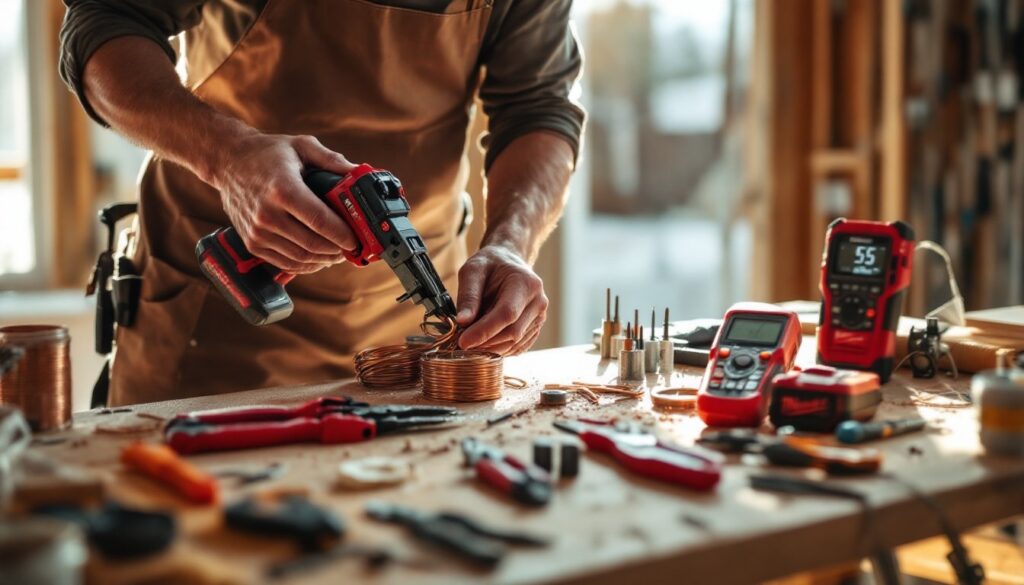
Wire strippers deserve their own mention. The Milwaukee automatic wire stripper handles gauges 10-24 AWG (American Wire Gauge), which covers nearly every residential circuit. Unlike cheap strippers that crush the insulation or leave copper nicks that weaken the wire, Milwaukee’s version uses a precision collet that cuts cleanly. You dial in the wire gauge, insert the wire, and the tool does the work, no guessing or adjusting. For roughing in, this saves hours.
Cutting tools matter too. A Milwaukee diagonal cutter or lineman’s cutter cleanly snips solid and stranded wire without leaving burrs that can snag insulation or create sharp edges. When you’re installing multiple outlets or light fixtures, clean cuts reduce the chance of later shorts or loose connections.
Power Tools for Residential Electrical Work
Most residential electrical projects don’t demand heavy cordless drills, but a compact, reliable drill-driver makes running cable, drilling mounting holes, and driving fasteners faster and more consistent. Milwaukee’s cordless tools are built around the M12 and M18 platforms, both of which integrate seamlessly if you’re expanding your collection.
Drills, Impact Drivers, and Hole Saws
A Milwaukee M12 compact drill-driver weighs around 3.6 pounds and fits into tight spaces like attic joists or behind wall studs. The compact form factor is key: full-size drills quickly become exhausting in overhead work. The drill features variable speed (0–1,500 RPM) so you can dial back the torque when driving drywall anchors or fasteners near wires without accidentally stripping them. The M12’s battery runtime on a single charge handles a few hours of light to moderate work, enough for roughing in or installing fixtures, though you’ll want a spare battery for all-day projects.
If you’re installing a ceiling fan or junction box, you’ll need hole saw bits. Milwaukee’s hole saw kit includes sizes from 1/2 inch to 1 1/2 inch, covering most residential runs. Use the M12 drill with a 1/2-inch chuck to drive hole saws: the compact drill’s lighter weight reduces arm strain, especially overhead. Electricians and experienced DIYers prefer hole saws over spade bits because the former drill a cleaner, more centered hole, and the pilot bit prevents the saw from walking across a stud.
Impact drivers are optional for most DIYers but useful if you’re driving lag bolts, securing conduit clamps, or fastening through heavy framing. The Milwaukee M12 impact driver (weighing about 2.6 pounds) delivers high torque without requiring you to muscle the tool, reducing hand fatigue and the risk of over-torquing fasteners. They’re not needed for simple outlet installation, but they shine during structural tasks like securing heavy fixture boxes. Recent reviews of Milwaukee tools highlight the brand’s drill and impact driver performance in residential settings.
Battery-powered tools also mean no cords trailing through your workspace, which is essential near water or when working in tight spaces. Always inspect your battery and charger for damage before each use, and never leave a cordless tool unattended while charging.
Safety and Testing Gear You Need on Every Job
Electrical work without proper safety gear isn’t a shortcut, it’s reckless. Even simple tasks like replacing an outlet or installing a switch can turn dangerous if you’re not testing first. A non-contact voltage tester (also called a tick tracer) is non-negotiable: it beeps or lights up when it detects live voltage without requiring direct contact. Milwaukee’s cordless tester costs under $20 and fits in a shirt pocket. Test every wire, box, and fixture before touching anything. This is the #1 habit that prevents shocks and fires.
Insulated tools reduce risk. Milwaukee’s electrician screwdrivers and pliers have non-conductive handles rated to 1,000 volts. They’re not a substitute for testing and de-energizing circuits, but they provide a layer of protection if you slip and touch a live wire. Always assume every wire is live until tested.
Personal protective equipment includes safety glasses to protect your eyes from wire clippings and dust when drilling. Nitrile gloves protect your hands and improve grip, especially useful when working in attics or basements where moisture is common. Hearing protection (foam earplugs or muffs) becomes important if you’re drilling repeatedly or using power saws to cut studs for new runs. A dust mask or respirator prevents inhalation of drywall dust or insulation fibers when drilling through walls.
A multimeter is essential for more advanced work. Milwaukee’s compact digital multimeter tests voltage (AC and DC), continuity, and resistance, allowing you to diagnose problems beyond just detecting live wires. If a fixture doesn’t work after installation, a multimeter tells you whether power is reaching the fixture or if there’s a wiring issue. For basic jobs like outlet swaps, a simple voltage tester suffices. For troubleshooting or running new circuits, a multimeter earns its cost fast. Resources like Family Handyman’s guides cover DIY electrical projects with emphasis on testing and safety protocols.
Conclusion
Milwaukee electrician tools deliver professional durability and precision without the contractor price tag, making them a smart investment for serious DIYers. Start with hand tools, strippers, pliers, screwdrivers, since they’re affordable and handle most residential tasks. Add a compact cordless drill and a voltage tester, then expand as projects demand. Respect the risk: always test before touching, wear safety gear, and call a licensed electrician for anything involving main panel work or requiring permits. The right tools make the job faster and safer: the right mindset keeps you from becoming a statistic.