
Table of Contents
ToggleAnyone who’s spent a day framing walls, driving fasteners, or wrestling with stubborn plumbing fixtures knows that grip strength isn’t just a gym metric, it’s essential for completing DIY projects safely and efficiently. Hand strength directly impacts your ability to control power tools, maintain steady pressure during detailed work, and prevent fatigue-related mistakes that lead to injuries or poor results. Whether you’re a weekend warrior tackling your first deck build or a seasoned DIYer juggling multiple renovations, building and maintaining hand strength can transform how you approach projects. The right hand strengthening tools won’t just help you finish stronger: they’ll reduce strain injuries, improve tool control, and let you work longer without losing precision. This guide walks you through the best options available in 2026, so you can pick tools that fit your grip-building goals.
Key Takeaways
- Hand strengthening tools are essential for DIY projects because they improve grip control, prevent fatigue-related mistakes, and reduce strain injuries like tendinitis and carpal tunnel syndrome.
- Spring-loaded hand grippers and adjustable resistance trainers are the most accessible and affordable starting point, with prices ranging from $15–80 depending on features and build quality.
- Maintaining 25–50% of your maximum grip strength throughout a task prevents form breakdown and compensatory injuries, making hand strength training a preventive safety measure.
- A complete hand strengthening toolkit should include grippers for overall squeeze, finger resistance bands for individual digit strength, and wrist rollers or therapy putty to address forearm fatigue.
- Train hand strengthening tools 3–4 times weekly with proper 48-hour rest between sessions, and you’ll notice meaningful improvements in tool control and endurance within 4 weeks.
- Hand strength is cumulative but not permanent, so consistent maintenance training throughout your DIY career keeps your grip sharp and ready for any project.
Why Hand Strength Matters for DIY Projects
Grip strength is the foundation of tool control and safety on any job site. When your hands tire quickly, your form breaks down, your shoulders compensate, your wrist flexes unevenly, and suddenly you’re pressing the drill trigger harder than you should, risking stripped screw holes or bent bits. A strong, stable grip also reduces repetitive strain injuries like tendinitis and carpal tunnel syndrome, which can sideline a DIYer for months.
Specific tasks demand different grip demands. Driving deck screws into treated lumber requires sustained squeeze strength. Operating a circular saw for hours demands finger endurance and wrist stability. Holding a paint roller overhead needs both power and stamina. According to research on occupational grip requirements, maintaining 25–50% of your maximum grip strength throughout a task prevents fatigue-related form breakdown. That’s why strength training tools matter: they build reserves so you’re never white-knuckling your tools just to finish the job.
Grip Trainers and Hand Exercisers
Spring-Loaded Hand Grippers
Spring-loaded hand grippers are the bread-and-butter tool for DIY grip training. They’re simple: two handles with a spring mechanism that resists closure. When you squeeze the grips together until they touch, you work the muscles that power your grip. Resistance typically ranges from 20 to 350 pounds of force, so you can start light and progress as you adapt.
Look for grippers with adjustable resistance (usually via a screw or interchangeable springs) so you can dial in challenge without jumping from 40 pounds straight to 100. Quality matters here, cheap grippers with loose pivots waste energy and don’t give honest feedback about your actual strength. A tested option like a Captains of Crush gripper (popular in strength-training circles, often compared favorably in home improvement tool reviews) offers consistent resistance and longevity, though entry-level spring grippers around $15–25 work fine for most DIYers starting out.
Use grippers 3–4 times weekly, doing 8–12 reps per hand. Rest at least 48 hours between sessions, your hand muscles need recovery just like your legs do after leg day.
Adjustable Resistance Trainers
Adjustable resistance hand trainers give you more flexibility than fixed-resistance grippers. Models with threaded resistance mechanisms or dial-based tension let you tweak pressure mid-session or scale challenge weekly. Some feature finger-separation springs, which isolate individual digits instead of working all four fingers at once.
These tools shine if you’re addressing specific weak points, say, a pinky finger that gasses out first or thumbs that lack endurance. Prices range from $30–80 depending on features and build quality. Expect them to be bulkier than a simple spring gripper but more versatile if you rotate between different grip styles throughout your training week.
Finger and Wrist Strengthening Devices
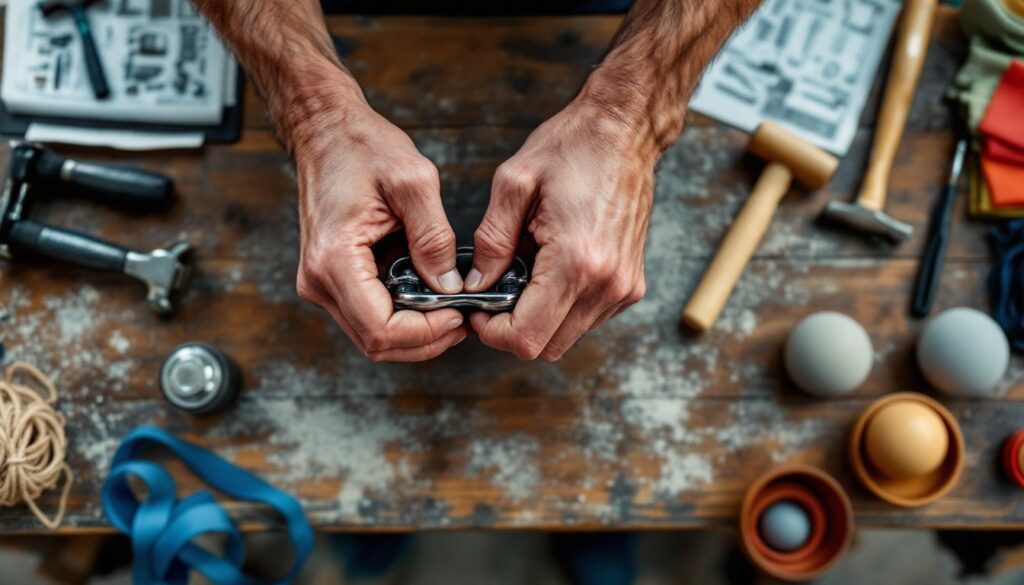
While hand grippers target overall squeeze, dedicated finger and wrist tools address the muscles that stabilize tools and prevent carpal tunnel strain. Finger resistance bands, simple latex or rubber bands stretched over your digits, force each finger to extend against resistance. They’re cheap (under $10), portable, and perfect for light daily activation work between heavier training sessions.
Wrist trainers and roller devices work the flexor and extensor muscles that run along your forearm. A wrist roller (basically a wooden dowel with a rope and weight attached) forces your wrist to curl and uncurl against load. Start with 2–5 pounds and focus on smooth, controlled motion rather than speed. These isolate the forearm fatigue that builds during repetitive overhead work like framing or trim installation.
Therapy putty offers a gentler, more tactile approach. You knead and mold it, varying pressure and movement patterns to build finger dexterity and hand endurance. Unlike a gripper’s fixed motion, putty lets you practice real-world manipulation, crucial if your hands feel clumsy or unresponsive after injury or long layoffs. Quality therapy putty (brands like Theraband) costs $8–15 per container and lasts months with occasional use.
Resistance Bands and Therapy Tools
Resistance bands for hand and finger work come in loops and open-ended strips. Loop bands stretched over your fingers offer progressive resistance as you extend, easy at first, harder as you straighten. Open-ended bands can wrap around your palm or specific fingers for targeted work. Quality rubber bands (latex-free if you have sensitivities) cost $12–25 per set.
Therapy balls sized for your palm (roughly 2–3 inches) let you build grip endurance through sustained squeezing. Roll one in your hand while watching TV, or do structured sets of 20–30 second holds. They’re forgiving if you have sore joints and excellent for injury recovery, many occupational therapists recommend them as warm-ups before grip training.
Looking at tested home improvement products, comprehensive resistance band sets often bundle finger loops, wrist bands, and therapy tools together for $25–40. That’s a smart entry point if you’re not sure which tool fits your needs. The redundancy means you can train different aspects of hand strength in a single session and swap tools if one gets uncomfortable or boring.
Choosing the Right Tool for Your Needs
Start by pinpointing where your hand strength limits your work. Do your forearms burn during long fastening sessions? That’s a gripper priority. Do your fingers feel shaky holding a paint roller or sanding block? Finger and wrist tools matter more. Do you have old injuries or tingling that worries you? Gentler therapy tools and light resistance bands prevent re-injury while building capacity.
Budget-conscious DIYers should grab a $25–40 spring gripper and a resistance band set, train 3–4 days weekly, and revisit strength in 4 weeks. Most people feel a meaningful difference, better tool control, less fatigue, within that timeframe. If you’re serious about long-term hand durability or recovering from carpal tunnel or tendinitis, invest in a complete hand-strengthening toolkit following project guides that pair tools with specific warm-up and training protocols.
One practical note: hand strength training is cumulative but not permanent. Use it or lose it applies here. Two weeks off the tools or training, and grip capacity slides noticeably. Plan on lifetime maintenance if you want to stay sharp, think of it like sharpening your chisels before every major project. The effort is small, the payoff is real.
Final Thoughts
Hand strength isn’t glamorous, but it’s foundational to DIY success and safety. Whether you pick a gripper, bands, or a mixed toolkit, consistency beats perfection. Train 3–4 times weekly, rest adequately between sessions, and reassess your grip every 4–6 weeks. Your future self, the one tackling a multi-week kitchen remodel without sore, exhausted hands, will thank you.