
Table of Contents
ToggleAnyone who’s spent an hour hunting for a drill bit buried in a toolbox knows the problem: tools scattered across drawers, shelves, and the back of a closet. The Milwaukee Packout system changes that game entirely. It’s a modular tool storage and transport solution that snaps together like LEGO blocks, letting DIYers organize everything from power tools to fasteners in one portable setup. Whether you’re tackling a single bathroom remodel or juggling multiple rooms, having your tools organized, accessible, and actually transportable saves time, frustration, and lets you focus on the work itself. We’ll break down how the Packout system works, what components fit your needs, and how to set it up so your projects run smoother.
Key Takeaways
- The Milwaukee Packout system is a modular storage solution that snaps together on a common locking base, allowing you to organize tools by category and scale your storage as your collection grows.
- Packout saves time, protects your back, and keeps your workspace clean by distributing weight across stackable units with integrated wheels that roll on the included base.
- The system includes full-size boxes, compact organizers, drawer units, and accessories like wall-mounting brackets and rolling cases that let you customize your layout for different project types.
- Start by taking inventory of your tools, grouping them logically (hand tools, fasteners, bits, power tools), and labeling compartments clearly to prevent time-consuming searches.
- For maximum efficiency, load heavier items on the bottom of your Packout stack, secure the base to a wall for stationary workshops or use the rolling case for multi-site projects.
- A modular Milwaukee Packout setup protects tools from damage and weather, keeps them away from children, and makes lending tools straightforward since you hand off organized, complete stacks.
What Is the Milwaukee Packout System and Why It Matters
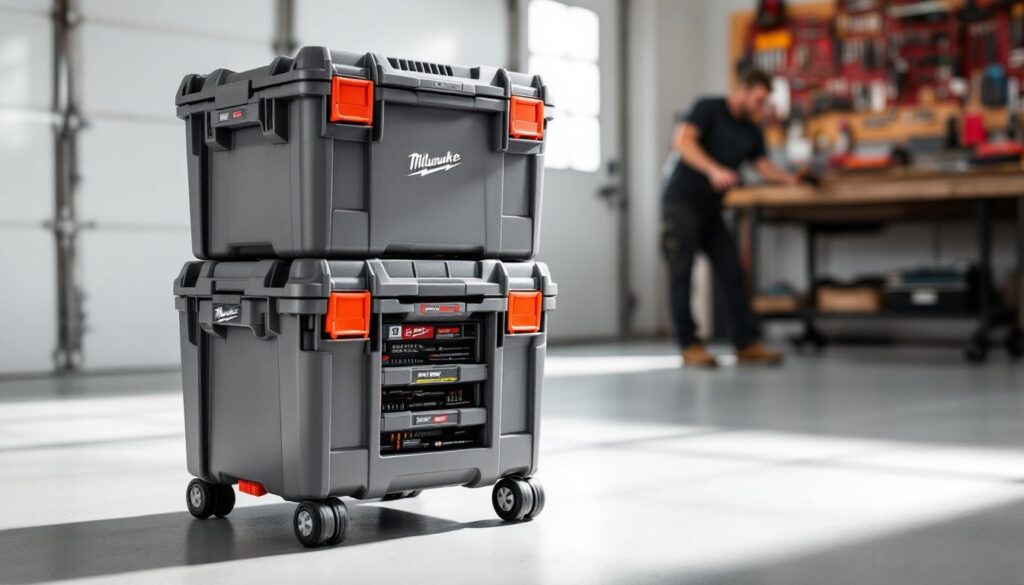
The Milwaukee Packout is a modular storage platform built on a common locking base that lets you stack, dock, and move tool storage units as one system. Each box, case, or organizer clicks onto the same locking frame, so you’re not juggling three different storage solutions. Instead of cramming tools into a single toolbox and hoping you remember where everything is, you organize by category, one unit for hand tools, another for fasteners, a third for power tools and batteries.
Why does this matter for homeowners and DIYers? First, it saves your back. A single heavy toolbox hurts to carry: a modular system distributes weight and rolls on integrated wheels. Second, it saves time. When you grab your Packout stack before a project, every tool stays organized exactly as you left it. Third, it keeps your workspace and home cleaner, no tool sprawl across the workbench or cabinet. The system scales with you too. Start with one box, add another when you need it, and the whole stack still locks together securely.
Key Components and Product Lineup
Modular Storage Boxes and Cases
The backbone of Packout is the Packout Box, a rugged plastic storage case available in full-size and compact versions. Full-size boxes measure 23″ W × 14″ H × 11.5″ D and hold larger items like circular saws, sanders, or stacked power tools. Compact boxes (roughly 10″ × 10″) are perfect for screws, nails, bits, and small parts. Milwaukee also makes specialized units: the Packout Drawer (modular filing-style drawers that slide out and lock in place), the Packout Organizer (a stackable case with removable compartments), and the Packout Tool Bag (soft-sided for portability). Each box has integrated latches that click into the common locking rail system, so they won’t shift or rattle when stacked. The plastic construction is impact-resistant, and the boxes are rated for stacking multiple units high without deformation.
Mounting Systems and Accessories
The Packout Mounting System is where modularity shines. A rubber-isolated rail runs along the underside and sides of each unit, allowing boxes to dock vertically, horizontally, or even to wall mounts. The Packout Wall Mounting Bracket lets you anchor a full stack to your garage wall or workshop, freeing up floor space. For transport, the Packout Rolling Case Base slides under your stacked boxes and provides four wheels, two locking, two swivel, so you can roll your entire tool library across a concrete slab, a driveway, or through your home to a project site. Add-on accessories like the Packout Power Tool Battery Holder or Bit Holder insert into the modular slots, so you’re not wasting box space or stuffing items haphazardly. This ecosystem approach means you can customize your layout as your tool collection and project needs evolve.
Benefits for Homeowners and DIY Projects
Organized storage might sound like a small thing, but it directly impacts how efficiently you work. When your drill bits, screwdriver bits, and fasteners are sorted in labeled compartments instead of a jumbled pile, you spend less time searching and more time building. For projects that span days or weeks, like kitchen cabinet installation or deck framing, leaving your tools organized and ready means you can jump back in quickly. The modular setup also protects your tools. Unlike tossing them loose into a car trunk, a locked Packout system keeps items secure, dust-free, and protected from weather when you’re moving between job sites. Many DIYers use multiple stacks: one for general hand tools and fasteners, another dedicated to plumbing supplies, a third for electrical or finish work. This discipline prevents the “I know I had a 1/2-inch coupling somewhere” panic.
For renters or folks with limited workshop space, a Packout stack is storage that moves with you. Roll it into a corner when you’re not working, and it takes up a fraction of the footprint of a traditional workbench. Families also benefit, tools stay corralled away from kids, and the system’s locking mechanism adds a safety layer. Finally, when you lend tools to a neighbor or family member, you can hand off an entire organized stack instead of a scattered handful, and you’ll know exactly what you lent and what’s due back.
How to Set Up Your Packout System for Maximum Efficiency
Start by taking inventory of what you actually own. Grab a notebook and list your tools, fasteners, blades, bits, and accessories. Group them logically: hand tools (hammers, wrenches, pliers), fasteners (screws, nails, anchors by size), bits and blades (drill bits, saw blades, driver bits), and power tools plus batteries. This step prevents you from buying storage units you don’t need.
Next, choose your box configuration. If you primarily work on general home repairs, a single full-size Packout Box plus one Compact Organizer for small parts is often enough. If you run multiple project types, one person handles plumbing, another does drywall, consider a dedicated box per discipline. Use drawer dividers or compartment inserts (sold separately) to prevent screws or bits from shifting and mixing. Label everything clearly with a permanent marker or a label maker: this takes fifteen minutes upfront and saves hours later.
For placement, consider your workflow. If you work mostly in one garage, a wall-mounted stack keeps it out of your way but accessible. If you move between rooms or job sites, the rolling base is essential. Load heavier items (power tools, batteries) on the bottom and lighter stuff (fasteners, bits) higher up, not just for stability, but because you’ll reach for small parts more frequently and don’t want to bend down as often.
Secure unused tools in their original cases or pouches before placing them in a Packout box: this prevents damage and keeps them organized within the box. For batteries and chargers, the dedicated battery holder keeps them together and prevents a “where’s the charger?” hunt. Finally, do a quick audit every month or two, move your Packout to a clear spot, empty it fully, and reorganize as needed. As your tool collection grows, you’ll add boxes. The beauty of the modular system is that you’re never starting over: you’re just snapping on another unit.
Conclusion
The Milwaukee Packout system solves a real problem: how to keep tools organized, mobile, and protected without overcomplicating your storage. Unlike a single monolithic toolbox or a scattered collection across your garage, Packout lets you scale your storage exactly to your needs and move everything together. Start small with one or two boxes, build from there, and let the modular design grow with your projects. With proper setup and labeling, you’ll spend less time hunting for tools and more time actually building.